Grade & Quality
How to Read an Ethanol Certificate of Analysis
A Certificate of Analysis is the main document a buyer has to judge whether a specific ethanol batch meets the agreed specification. Knowing what each field means — and what is missing — makes supplier approval and incoming QC faster.
Krivaana Editorial Team · Updated 8 October 2026 · 3 min read
What is an ethanol COA?
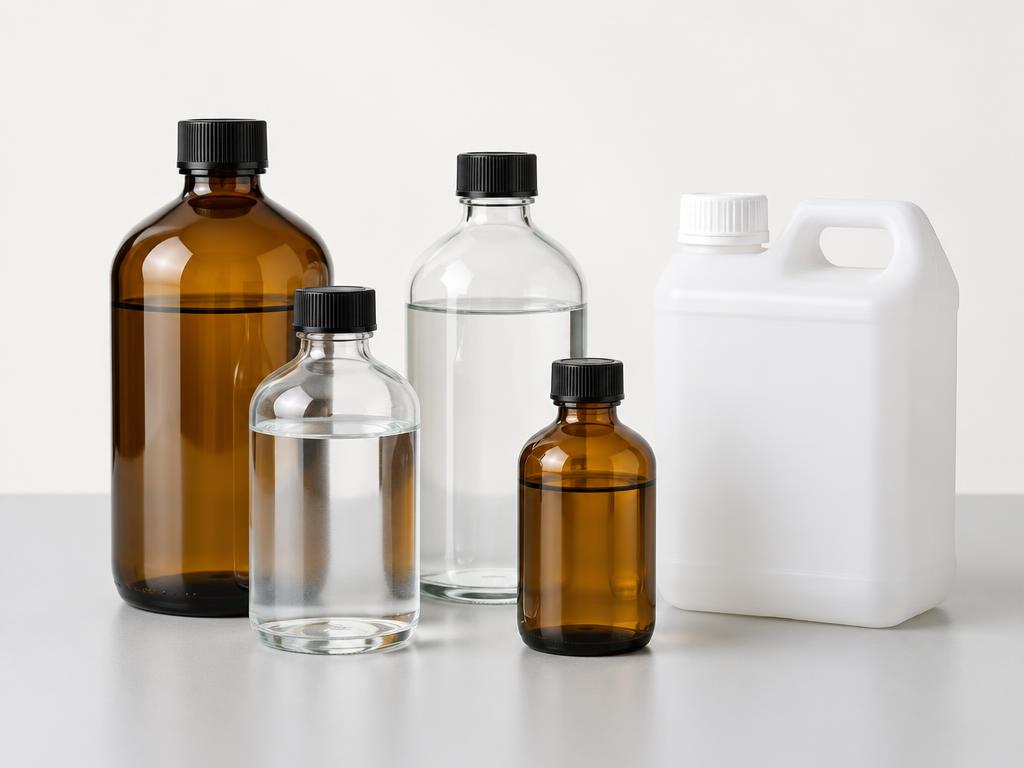
An ethanol Certificate of Analysis is a document for a specific batch that lists the parameters tested, the method used, the specification limit and the actual result. It shows whether that batch conforms to the stated grade or customer specification.
The applicable limits and test parameters depend on the product grade, customer specification and supplied batch documentation. Not every ethanol grade or COA contains every parameter listed below.
Product, grade and batch identification
- Product name and grade — should match your order exactly (e.g. Ethanol 99.9%, Special Denatured Spirit (SDS) 95%)
- Batch / lot number — must match the number on the containers or dispatch documents
- Date of manufacture or analysis, and where given, retest date
- Issuing party — identifies who performed or issued the analysis
Ethanol itself is identified as CAS 64-17-5, formula C₂H₅OH. Denatured grades also contain a denaturant, which may be named on the COA or specification.
Common test parameters
| Parameter | What it tells you |
|---|---|
| Assay / alcohol content | Ethanol strength of the batch, usually as % v/v or % w/w — check which basis is used |
| Density / specific gravity | Physical check linked to strength; reported at a stated temperature where applicable |
| Water / moisture | Water content where tested; important for low-water grades |
| Appearance | Clear, colourless, free from suspended matter — as specified |
| Odour | Where specified; important for fragrance and personal care uses |
| Acidity / alkalinity | Where applicable; indicates acidic or alkaline impurities |
| Residue / non-volatile matter | Where applicable; material left after evaporation |
| Methanol / other impurities | Where applicable; limits depend on grade and specification |
Test method, specification limit and actual result
For each parameter, a good COA shows three things: the method (for example an Indian Standard published by BIS or another recognised method), the specification limit, and the actual result. Compare the result with your own specification, not only with the limit printed on the COA — the supplier's limit may differ from yours.
A pass or "conforms" notation means the result met the stated limit. If a parameter you control is absent, ask for it before approving the batch.
A quick buyer checklist
- Batch number on COA matches containers and invoice
- Grade on COA matches the purchase order
- All parameters in your specification are reported
- Results are within your limits, on the same units and basis
- For denatured grades, the denaturant matches the agreed specification
COA vs SDS — what is the difference?
A COA reports the quality of a specific batch against a specification. A Safety Data Sheet (SDS) describes the hazards of the product and how to handle, store, transport and respond to incidents safely. You need both, and they answer different questions.
| COA | Safety Data Sheet | |
|---|---|---|
| Purpose | Batch / product quality specification information | Hazard, handling, storage and safety information |
| Specific to | One batch or lot | The product, not one batch |
| Used by | QC, purchase, production | EHS, stores, logistics, production |
Safety Data Sheets generally follow the 16-section format of the Globally Harmonized System (GHS). Physical property references such as the NIST Chemistry WebBook are useful for background, but your batch COA is what governs acceptance.
Documentation from Krivaana
Krivaana shares the batch COA where available, the Safety Data Sheet and commercial documents with supply — see Quality & Documentation. For grades such as Ethanol 99.9% or AR / laboratory grade ethanol, you can request the COA before ordering through Contact.
This guide is general procurement information from Krivaana Industries LLP, an ethanol supplier. It is not a regulatory, laboratory or legal opinion. Applicable requirements should be confirmed for the specific grade, use and destination.